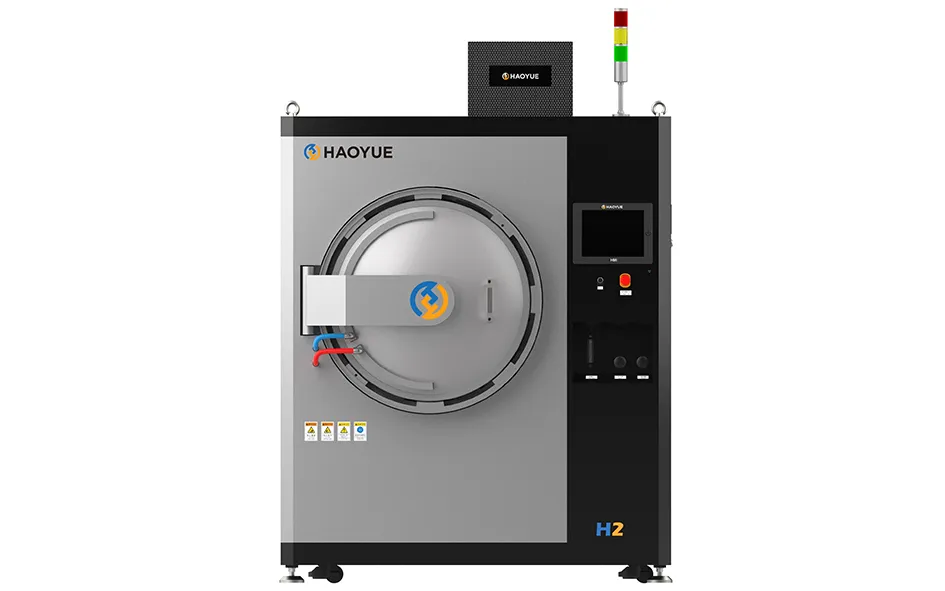
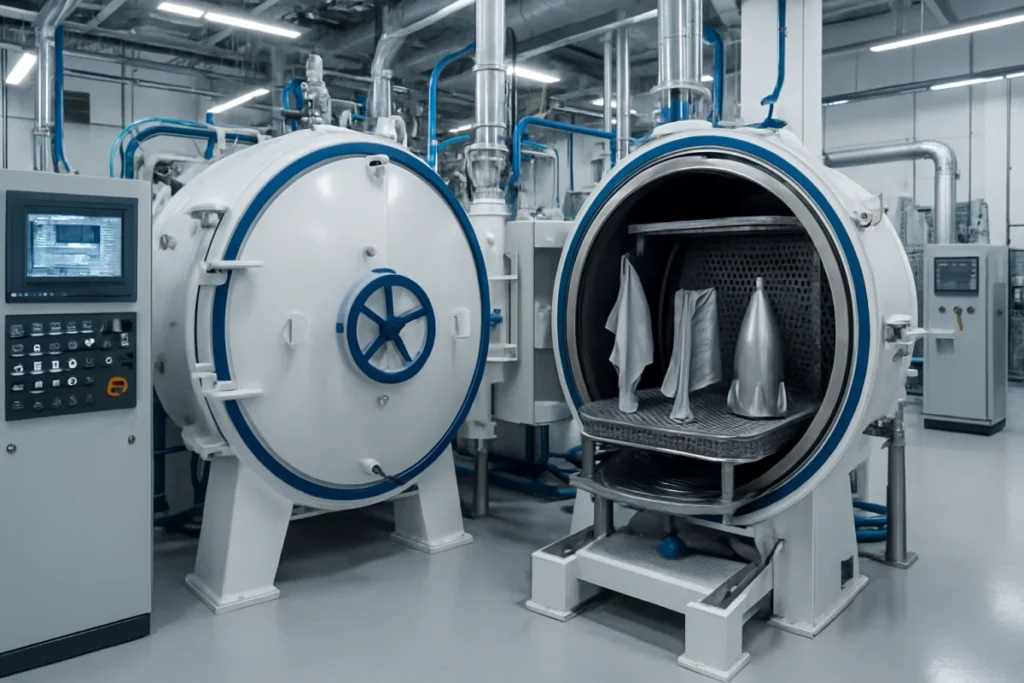
In the aerospace industry, achieving consistent part quality while managing risks such as oxidation and contamination is a perpetual challenge. Production inefficiencies and compliance issues, particularly in processes like vacuum heat treatment and brazing, can significantly impact operational success. This is where advancements in sintering technology, specifically gas pressure sintering and vacuum sintering, come into play.
Understanding Gas Pressure Sintering
Gas pressure sintering involves the application of high pressure and temperature to compact powder metallurgy components. This method enhances material density and mechanical properties, making it ideal for aerospace parts that require robustness and precision. However, pressure levels must be meticulously controlled to prevent defects.
Applications in Aerospace
Gas pressure sintering is frequently employed in manufacturing turbine blades and structural components. The process ensures high-precision joining and diffusion bonding, crucial for parts exposed to extreme operational environments.
Challenges and Solutions
Common challenges include managing uniform pressure distribution and minimizing thermal gradients. These obstacles can lead to inconsistencies in part quality. Advanced vacuum sintering furnaces with precise temperature control and ±1°C uniformity offer solutions for these issues.
Advantages of Vacuum Sintering
Vacuum sintering uses a controlled environment to eliminate oxidation risks and improve part purity. Vacuum levels reaching 10⁻⁶ mbar ensure a contaminant-free atmosphere, critical for high-performance aerospace components.
Real-World Applications
This technology is used extensively in producing flight-critical parts where material integrity is non-negotiable. Aerospace standards such as Nadcap and AMS guide the production processes, ensuring compliance and quality assurance.
Addressing Production Challenges
Vacuum sintering addresses challenges like cycle repeatability and process stability. With automated batch consistency, manufacturers can achieve higher yield rates and reduced scrap rates, directly impacting cost efficiency.
Compliance and Standards in Aerospace Manufacturing
Adhering to industry standards is paramount in aerospace manufacturing. Standards like Nadcap and ISO are not just regulatory requirements but frameworks that ensure safety and performance. Vacuum technology aligns with these standards, offering process stability and traceability.
Ensuring Quality and Performance
By maintaining rigorous temperature and vacuum control, vacuum furnaces help in meeting stringent aerospace specifications. This not only enhances product quality but also supports compliance validation, a critical factor for quality control professionals.
Modern vacuum furnace technology offers unparalleled process stability and product quality improvements. With features like ±1°C temperature uniformity and vacuum levels up to 10⁻⁶ mbar, it ensures repeatable and automated batch consistency. Engineers can request technical datasheets or process consultations to explore tailored solutions. Procurement managers might consider requesting quotations for bulk solutions, while quality teams can inquire about compliance validation and certification support.