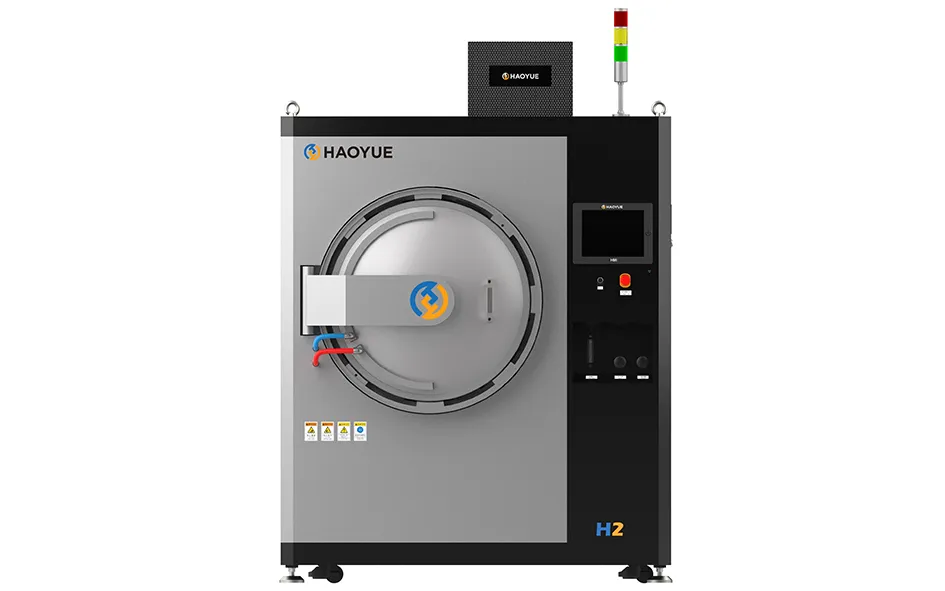
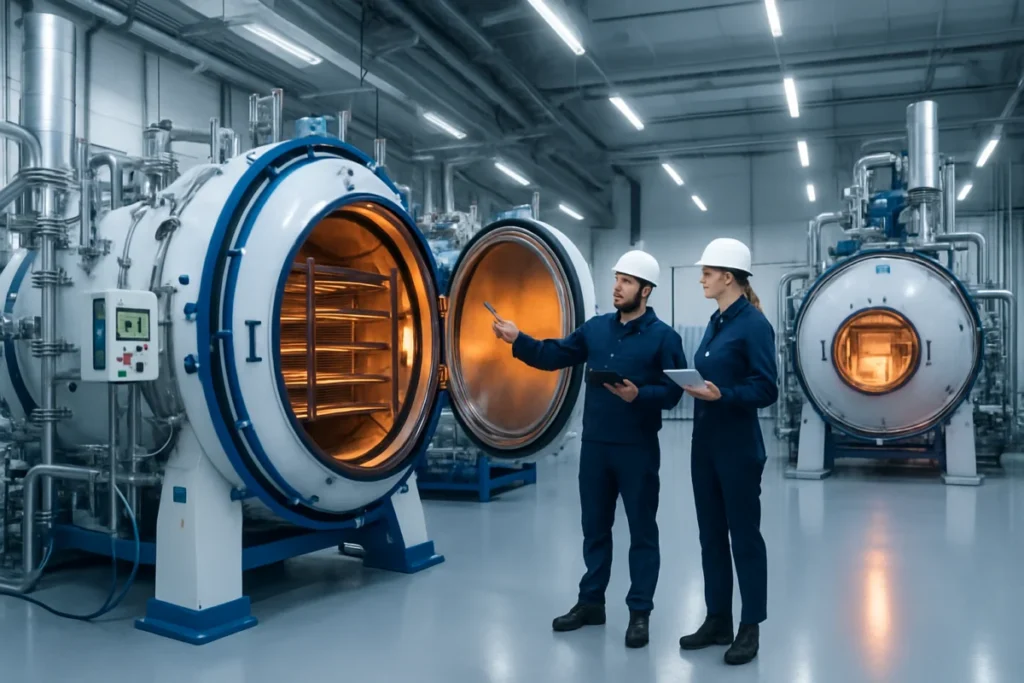
In the aerospace industry, maintaining consistent part quality while minimizing contamination is a paramount concern. Process engineers often grapple with the challenges of oxidation and impurities during vacuum heat treatment, brazing, and joining processes. These issues not only affect the performance of critical components but also jeopardize compliance with stringent standards like Nadcap and ISO.
Understanding Vacuum Brazing in Aerospace Applications
Vacuum brazing is a key technique in aerospace for creating high-precision joints without the risk of contamination. This process involves heating components in a vacuum environment, which prevents oxidation and ensures a clean, strong bond. The vacuum levels, often reaching up to 10⁻⁶ mbar, are crucial for achieving the desired results.
Real-world applications include the production of engine components, where maintaining structural integrity under high stress is essential. Here, vacuum technology eliminates the presence of gases that could cause porosity and weaken the joint.
The Role of Diffusion Bonding in High-Precision Joining
Diffusion bonding is another critical process used in the aerospace sector for its ability to join similar and dissimilar metals with precision. This technique leverages high temperatures and pressure in a vacuum sintering furnace to facilitate atomic diffusion across the interface, creating a seamless bond.
Engineers often face challenges with temperature control and uniform pressure application. Advanced vacuum systems provide ±1°C temperature uniformity, addressing these hurdles effectively and ensuring high-quality output.
Vacuum Heat Treatment for Enhanced Material Properties
Vacuum heat treatment is pivotal in enhancing the mechanical properties of aerospace materials. The process involves heating metals to a specific temperature, holding them at that temperature, and then cooling them in a vacuum. This method improves hardness, strength, and resistance to wear.
Temperature control and cycle repeatability are critical parameters here. Modern vacuum furnaces offer automated batch consistency, ensuring each cycle meets precise specifications, thus boosting yield rates and cost efficiency.
Compliance and Standards in Vacuum Processes
Compliance with industry standards such as AMS, Nadcap, and ISO 13485 is non-negotiable for aerospace suppliers. Vacuum technology is integral in meeting these standards by providing an environment free from contaminants and ensuring product reliability.
Quality control professionals benefit from the repeatability and stability offered by vacuum processes, which are essential for certification and validation.
Modern vacuum furnace technology offers unparalleled process stability and product quality improvements. By achieving precise temperature uniformity and maintaining high vacuum levels, manufacturers can enhance their yield rates and reduce costs. The ability to automate processes further ensures batch consistency, making these systems indispensable in aerospace applications.
For engineers seeking detailed technical datasheets or process consultations, for procurement teams inquiring about quotations for bulk solutions, or for quality teams needing compliance validation and certification support, advancing in vacuum technology is a strategic imperative.