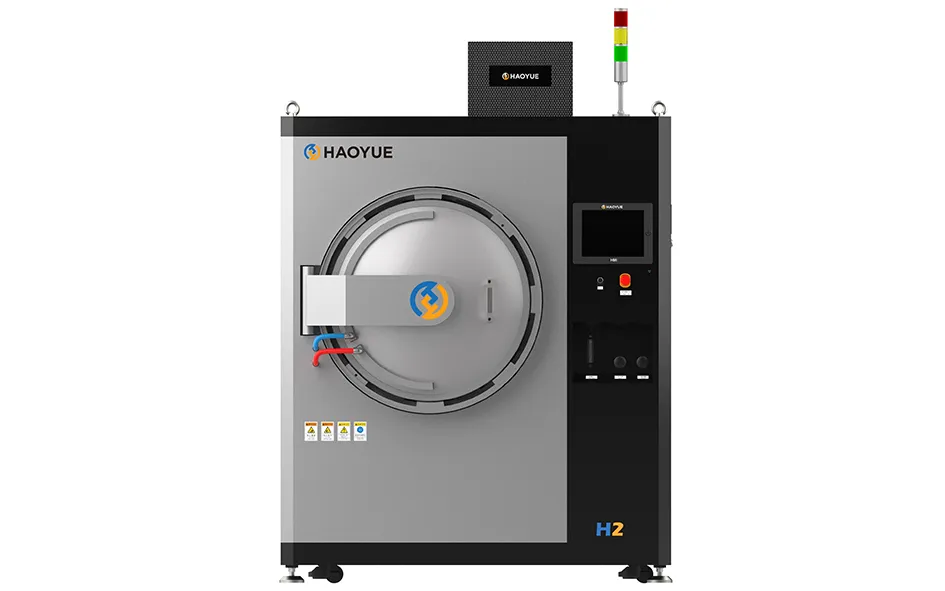
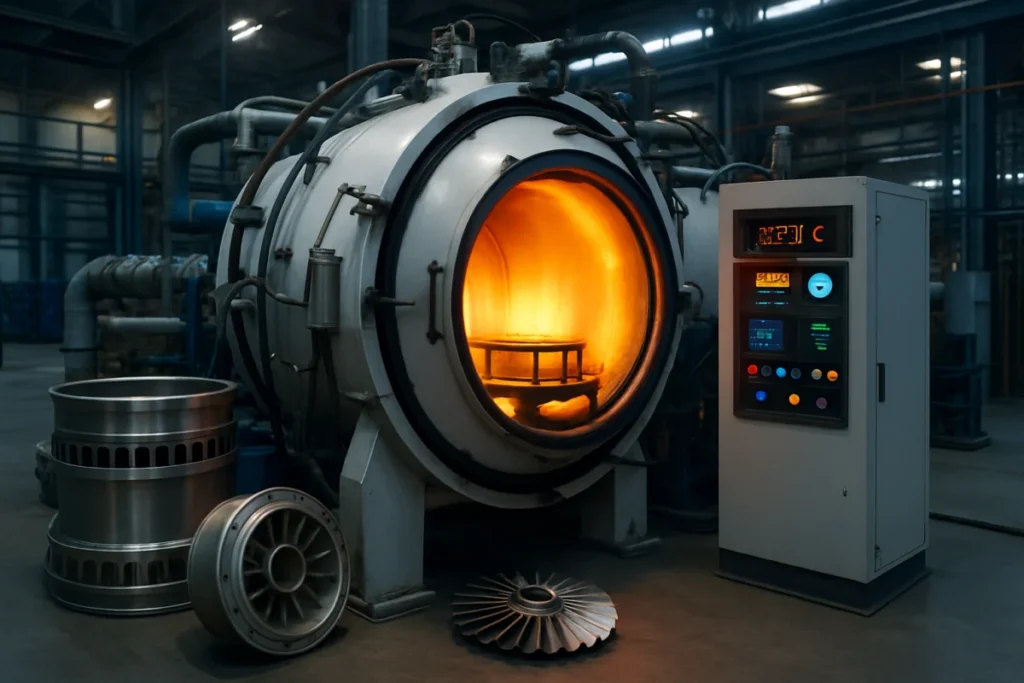
In the competitive landscape of aerospace manufacturing, achieving consistent part quality while avoiding contamination and oxidation remains a significant challenge. Vacuum furnaces offer a compelling solution for these issues by providing a controlled environment for processes such as vacuum heat treatment, vacuum brazing, and diffusion bonding. This technology ensures compliance with stringent industry standards like Nadcap and AMS, essential for maintaining the integrity of aerospace components.
Understanding Vacuum Brazing in Aerospace Applications
Vacuum brazing is a crucial process for high-precision joining in aerospace manufacturing. It involves joining two metals using a filler metal with a lower melting point, which flows through capillary action in a vacuum environment. This method eliminates oxidation and contamination, resulting in clean, strong joints. Real-world applications include the production of turbine blades and other critical components where reliability is paramount.
Addressing Quality Challenges
A common issue in traditional brazing is the presence of oxides, which can weaken joints. Vacuum technology mitigates this by maintaining vacuum levels as low as 10⁻⁶ mbar, ensuring a perfect joining environment. Moreover, the precise control of temperature, often within ±1°C, contributes to consistent results across batches.
The Role of Vacuum Sintering Furnaces in Powder Metallurgy
Powder metallurgy relies heavily on vacuum sintering furnaces to produce high-quality components. These furnaces consolidate powdered materials into solid forms through heat application in a vacuum, which prevents contamination and ensures uniform density. This process is vital for producing parts with complex geometries and high-performance requirements.
Enhancing Process Stability
Vacuum sintering furnaces offer enhanced process stability, crucial for industries that demand exacting tolerances. The ability to maintain consistent vacuum levels and temperature profiles ensures that each cycle yields parts with optimal mechanical properties. This repeatability is a key advantage in sectors such as aerospace and medical devices.
Diffusion Bonding for High-Precision Joining
Diffusion bonding is another advanced technique facilitated by vacuum furnaces, particularly useful for joining dissimilar metals. By applying heat and pressure in a vacuum, the process enables the atoms of the bonding surfaces to diffuse into each other, creating a seamless joint without the need for filler materials. This is pivotal in applications requiring high strength and corrosion resistance.
Compliance with Industry Standards
For aerospace components, adherence to standards like Nadcap and AMS is non-negotiable. Vacuum furnace processes ensure compliance by providing the controlled conditions necessary to meet these rigorous specifications. This leads to improved product quality and reduced risk of component failure.
Advancing Efficiency and Cost Effectiveness
Modern vacuum furnace technology not only enhances product quality but also improves yield rates and cost efficiency. The automation of furnace operations allows for repeatable and consistent batch processing, reducing waste and production time. This technological advancement aligns with the industry’s push towards sustainable and cost-effective manufacturing solutions.
For engineers and quality control professionals, exploring the capabilities of vacuum furnaces can provide significant process improvements. Requesting technical datasheets or a consultation can offer deeper insights into optimizing your operations. Procurement managers can benefit from exploring bulk solutions and requesting quotations tailored to specific production needs. Finally, ensuring compliance with standards through certification support can safeguard product integrity and market reputation.