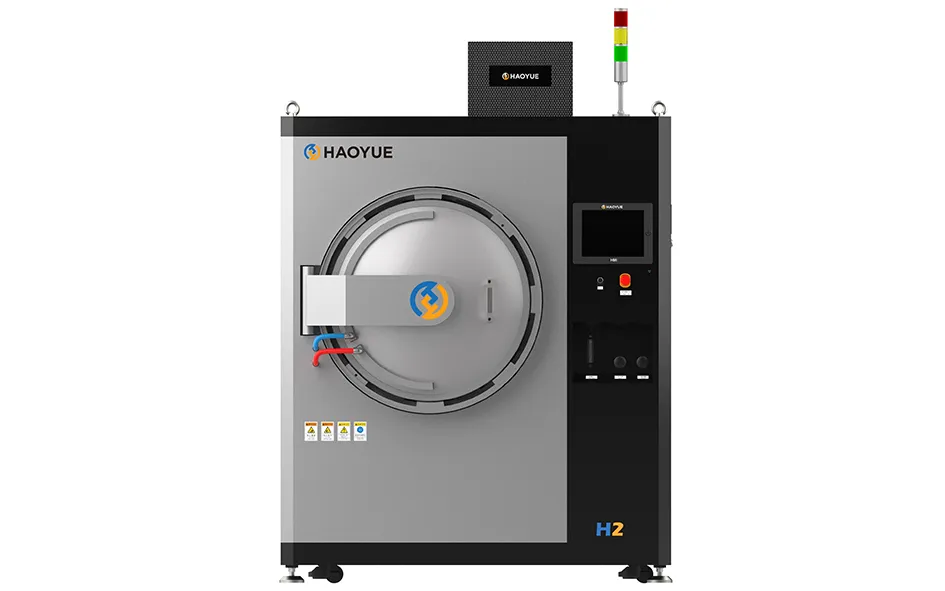
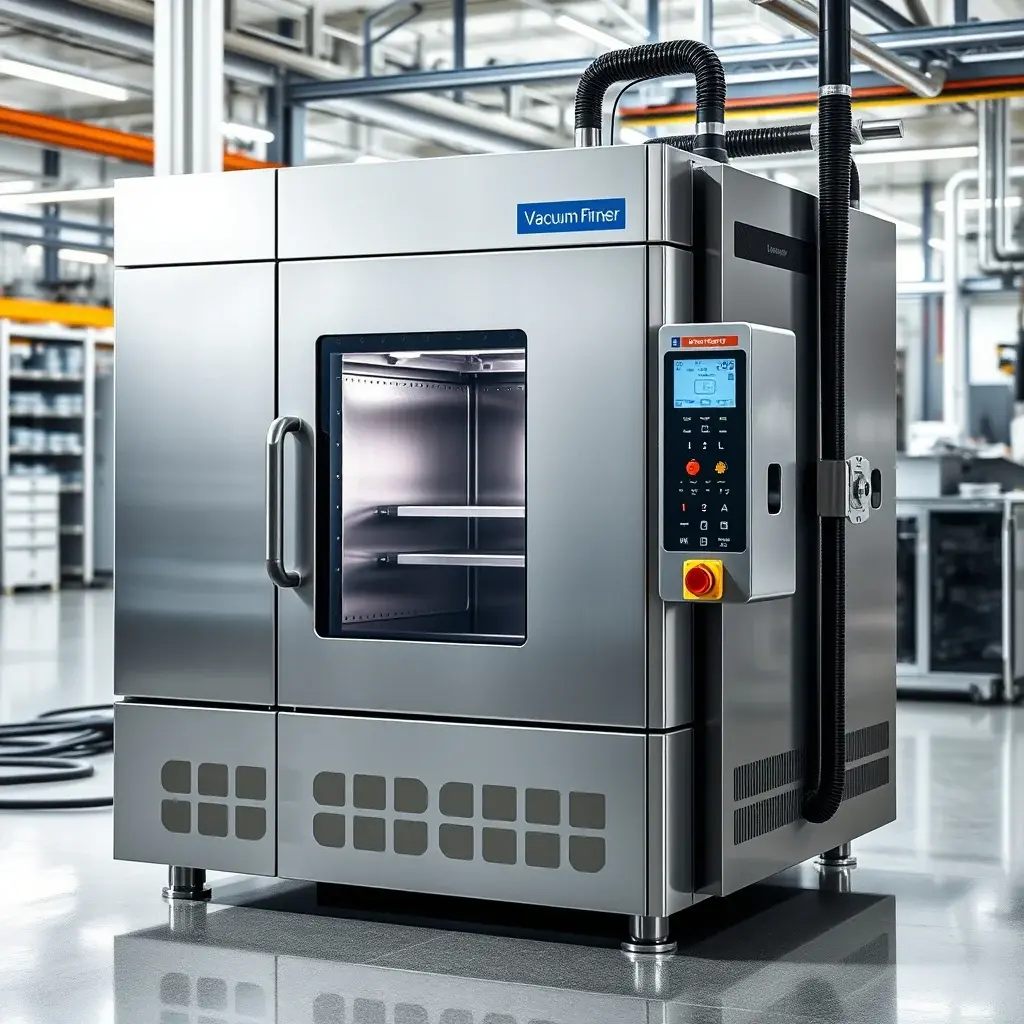
In the demanding fields of aerospace, medical devices, and precision manufacturing, ensuring consistent part quality remains a significant challenge. Inconsistencies often arise from production inefficiencies, contamination, and oxidation during high-temperature processes like vacuum heat treatment. Addressing these challenges is paramount for compliance with standards such as Nadcap, ISO, and FDA, all of which are crucial for maintaining a competitive edge in these industries.
Optimizing Vacuum Brazing for Enhanced Precision
Vacuum brazing is a critical process for achieving high-precision joining in structural ceramics. This technique eliminates oxidation and contamination by utilizing a vacuum environment, allowing for clean, strong joints. In powder metallurgy, for example, vacuum brazing ensures that the metal powders fuse efficiently, resulting in components with enhanced mechanical strength and reliability.
Industries such as aerospace demand tight tolerances and high strength-to-weight ratios. Here, vacuum brazing provides a solution by delivering joints that meet stringent Nadcap and AMS standards, ensuring safety and performance.
Diffusion Bonding: Achieving Superior Mechanical Integrity
Diffusion bonding is another technique employed to enhance the mechanical integrity of structural ceramics. By applying heat and pressure in a vacuum, this method allows atoms to migrate across the interface, creating a bond with properties akin to the base material. This process is particularly valuable in the manufacturing of aerospace components, where ultimate reliability is non-negotiable.
Challenges such as inadequate temperature control and inconsistent vacuum levels can impede diffusion bonding’s effectiveness. However, modern vacuum sintering furnaces address these issues, offering precise temperature regulation and vacuum levels reaching up to 10⁻⁶ mbar, ensuring repeatable and dependable outcomes.
Improving Yield with Vacuum Heat Treatment
Vacuum heat treatment is integral to achieving optimal mechanical properties in structural ceramics. By removing atmospheric contaminants, it enhances the material’s strength and durability. This is crucial in medical device manufacturing, where ISO 13485 compliance demands the highest standards of quality and safety.
Process engineers can achieve remarkable improvements in yield rates through vacuum heat treatment, benefiting from uniform temperature distribution and automated batch consistency, which are essential for maintaining robust quality control measures.
Ensuring Compliance with Industry Standards
Compliance with industry standards is non-negotiable in high-stakes sectors. Modern vacuum furnace technology facilitates adherence to these standards by offering features such as ±1°C temperature uniformity and sophisticated control systems that guarantee process stability and product quality.
For procurement managers, ensuring that these technologies align with industry standards can significantly streamline the procurement process, reducing risks and enhancing supply chain reliability.
Leveraging advanced vacuum furnace technology not only addresses production challenges but also enhances process stability, product quality, and cost efficiency. With capabilities such as automated batch consistency and precise control over temperature and vacuum levels, industries stand to gain significantly in terms of yield rates and compliance adherence.
For engineers, accessing technical datasheets or consulting on processes can unlock further potential in optimizing manufacturing operations. Procurement managers can benefit from tailored quotations or bulk solutions that align with their strategic goals. Quality control professionals can seek out compliance validation and certification support to ensure that their products meet the highest standards.