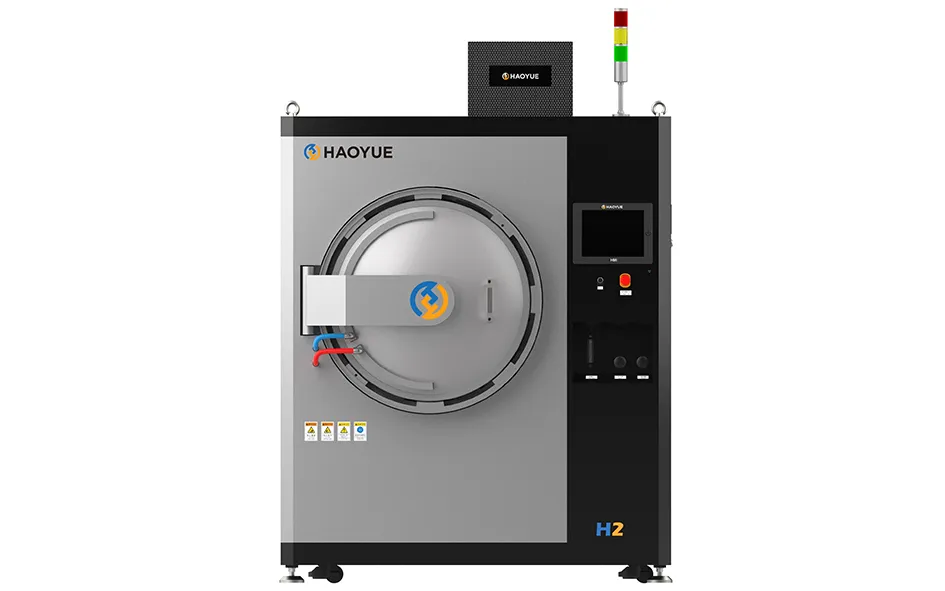

In industries like aerospace and medical devices, achieving consistent part quality is paramount. Yet, challenges such as oxidation and contamination during vacuum heat treatment often lead to production inefficiencies. With stringent compliance requirements such as Nadcap and ISO standards, finding a robust solution becomes crucial.
Why Vacuum Sintering Furnaces Are Critical for High-Precision MIM Parts
Vacuum sintering furnaces are indispensable in the field of Metal Injection Molding (MIM) due to their ability to ensure high-precision and consistency. The vacuum environment minimizes the risk of oxidation and contamination, critical for industries where even minor impurities can lead to significant quality issues.
Real-World Industrial Applications
In powder metallurgy, vacuum sintering is used extensively to produce components with complex geometries and high density. This process is particularly beneficial in manufacturing aerospace parts, where precision and material integrity cannot be compromised.
Addressing Production and Quality Challenges
One common challenge is maintaining temperature uniformity. Vacuum sintering furnaces provide ±1°C temperature uniformity, ensuring that each batch of parts meets stringent quality standards. This level of precision is vital for achieving the desired mechanical properties in critical applications.
Key Features to Look for in a Hydrogen Molybdenum Furnace
Hydrogen molybdenum furnaces are designed for high-temperature sintering applications, offering unique advantages in terms of energy efficiency and process control. Key features include:
- High-temperature capabilities up to 2500°C
- Vacuum levels reaching 10⁻⁶ mbar
- Automated control systems for repeatable batch consistency
Benefits for Controlled Atmosphere Sintering
These furnaces are particularly suited for controlled atmosphere sintering, where precise environmental conditions are necessary to prevent contamination and ensure the integrity of sintered parts.
The Role of Vacuum Brazing in Precision Manufacturing
Vacuum brazing plays a vital role in high-precision joining applications. The absence of air and moisture during the process prevents oxidation, resulting in clean joints with superior strength and reliability. This technique is widely used in the medical device industry, where joint integrity is crucial for patient safety.
Technical Parameters and Compliance
Meeting industry standards such as ISO 13485 requires not only technical expertise but also compliance with stringent quality control measures. Vacuum brazing ensures that these standards are met with precision and consistency.
Modern vacuum furnace technology addresses many challenges faced by industries today. By offering process stability, improved product quality, and enhanced yield rates, these solutions provide a cost-effective pathway to compliance and excellence. For custom sintering solutions tailored to your production needs, reach out to our engineering team to discuss your project requirements.