Application context
For powder development, ashing and small ceramic batches, usable space matters more than nominal chamber volume. The crucible, tray and clearance around each sample determine how a batch can be loaded and heated. This muffle furnace brings chamber access and temperature control into one enclosure.
The process challenge
Make room for the batch without losing process consistency
When a formulation must be split between several firings, differences in loading, ramp rate and cooling can complicate the comparison between samples. A useful chamber specification begins with the actual crucibles or trays and the clearance needed around them.
The process chemistry matters too. Binder residues, vapours or powders can affect chamber surfaces and subsequent batches. Battery-material and ceramic development therefore need a review of lining compatibility, sample containment and exhaust requirements alongside the heating program.
- Size the working space around the loaded crucibles and required clearances.
- Keep loading positions and sample spacing consistent between trials.
- Review off-gas chemistry before choosing chamber materials and ventilation.
- Define which temperature records are needed for comparing batches.
The equipment solution
An accessible chamber with an integrated control enclosure
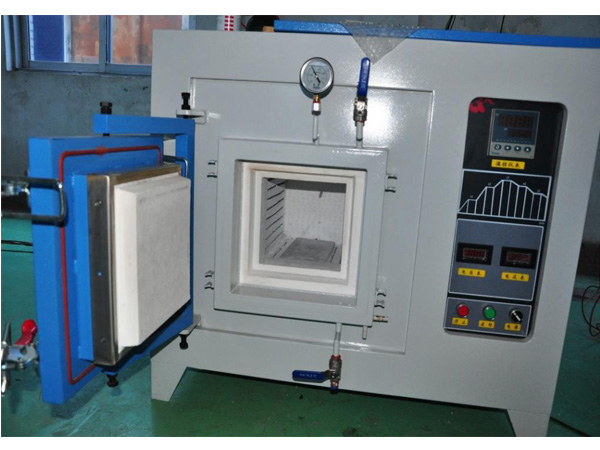
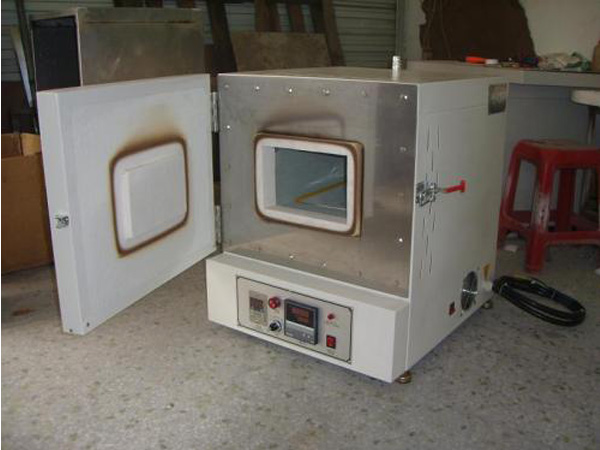
The open-door view shows a rectangular chamber surrounded by insulation. A raised insulated plug on the hinged door aligns with the chamber entrance. This gives direct access to the loading opening and the surface supporting the samples.
The temperature controller and operating instruments sit below the chamber. The arrangement keeps the heating enclosure and controls together in a compact unit. For a similar application, we would review usable tray space, lining chemistry and the complete heating cycle together.
- 01Front access for placing and retrieving crucibles or trays.
- 02Insulated door plug aligned with the rectangular chamber opening.
- 03Integrated lower panel for temperature settings and operating controls.
Equipment details
- Rectangular front-opening chamber
- Hinged door with raised insulation plug
- Digital temperature controller below the chamber
- Compact enclosure with integrated instruments
Practical value
How the design supports the process
| Process priority | Equipment design | Practical purpose |
|---|---|---|
| Sample handling | Open front chamber | Direct access to arrange crucibles and inspect the loading area. |
| Thermal enclosure | Insulated chamber entrance and door plug | A defined closure around the sample space. |
| Laboratory layout | Controls below the chamber | Heating and operation are brought together in one unit. |
For a laboratory batch furnace, usable chamber space, sample chemistry and the firing program must work together. Establishing all three provides a practical basis for repeatable sample preparation.
For your project
Planning a similar installation
For a comparable requirement, the following checks help connect the equipment specification to the process you need to run.
- 01
Check the loaded tray layout and clearance from chamber walls and heating surfaces.
- 02
Verify temperature distribution with the agreed sample arrangement.
- 03
Review the exhaust route for the material and its decomposition products.
- 04
Trial the intended heating and cooling profile and define the required batch record.
Talk to HuanYu
Tell us about your application
- Sample chemistry and batch quantity
- Crucible or tray dimensions
- Heating, hold and cooling profile
- Off-gas and recording requirements