In the realm of industrial manufacturing, achieving consistent part quality remains a significant challenge, particularly when dealing with advanced materials in high-precision applications. Inconsistent sintering quality, for instance, can lead to costly reworks and compliance risks, especially in industries like aerospace and medical devices where standards such as Nadcap and ISO 13485 are non-negotiable. Vacuum sintering furnaces play a pivotal role in addressing these issues by offering controlled environments that minimize oxidation and contamination.
Why Vacuum Sintering Furnaces Are Critical for High-Precision MIM Parts
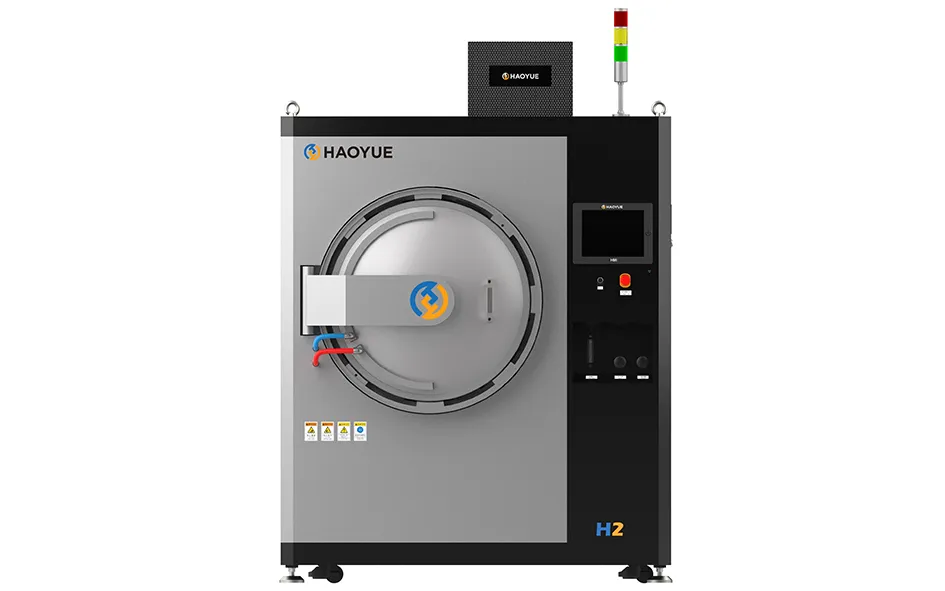
The precision required in Metal Injection Molding (MIM) parts necessitates the use of advanced vacuum sintering furnaces. These furnaces provide the necessary temperature uniformity and vacuum levels to ensure high-quality output. By maintaining a vacuum level up to 10-6 mbar, these systems prevent oxidation and ensure the integrity of the sintered parts. This is particularly crucial in the aerospace sector, where even minor deviations can lead to significant failures.
Key Features to Look for in a Hydrogen Molybdenum Furnace
When selecting a hydrogen molybdenum furnace, industrial buyers should consider several key features. Temperature control is paramount, with high-temperature sintering equipment offering ±1°C uniformity across the batch. The ability to handle controlled atmosphere sintering is also crucial for achieving optimal results in powder metallurgy applications. Additionally, safety features and energy efficiency are essential for reducing operational costs and ensuring compliance with industry standards such as AMS and ISO.
Technical Specifications and Benefits
- Temperature Uniformity: ±1°C across the chamber
- Vacuum Levels: Up to 10-6 mbar
- Heating Elements: Made from high-quality materials for longevity
- Energy Efficiency: Advanced insulation materials reduce energy consumption
- Safety Features: Integrated systems to prevent overheating and gas leaks
Applications in Aerospace, Medical, and Automotive Industries
The use of vacuum heat treatment and sintering technologies extends across multiple industries. In aerospace, the need for lightweight yet durable components is met through precise vacuum brazing and diffusion bonding processes. The medical device industry benefits from high-precision joining techniques that ensure the reliability and safety of critical components. Automotive manufacturers leverage these technologies to enhance performance and durability in high-stress environments.
Meeting Industry Standards and Ensuring Compliance
Compliance with industry standards such as Nadcap, AMS, and FDA is essential for manufacturers aiming to maintain credibility and market access. Vacuum technology solutions ensure that manufacturing processes meet these rigorous standards by providing consistent process stability and high product quality. The repeatable and automated batch consistency offered by modern vacuum furnaces is a key factor in achieving compliance validation.
Modern vacuum furnace technology addresses the complex challenges faced by industrial buyers by enhancing process stability and product quality while reducing costs. With precise temperature control and superior vacuum levels, these furnaces deliver repeatable results that meet the highest industry standards. For custom sintering solutions tailored to your production needs, reach out to our engineering team to discuss your project requirements.