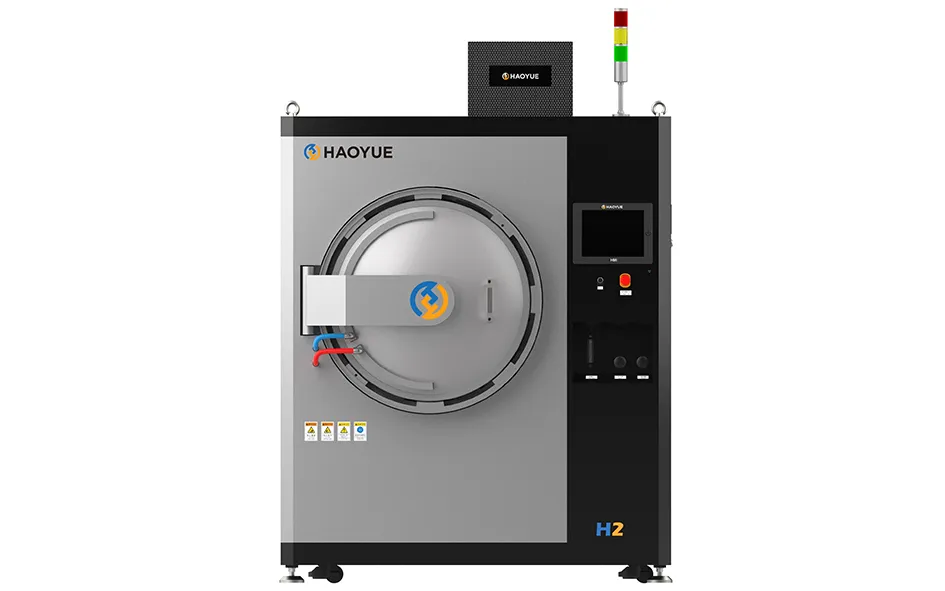
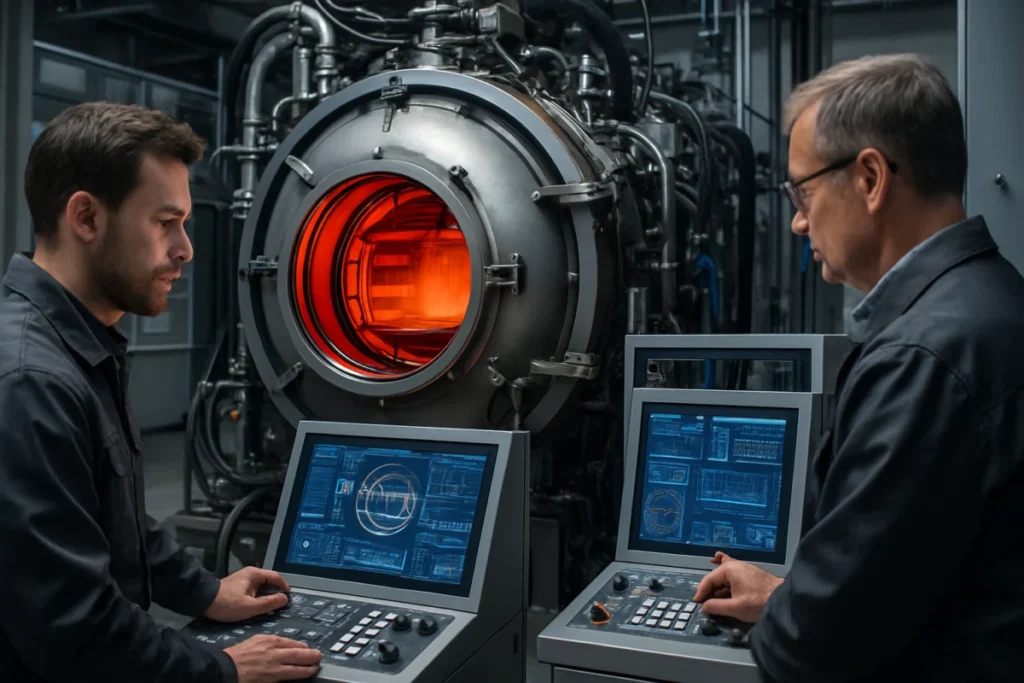
In industries like aerospace and precision manufacturing, the quest for high-strength titanium components often meets the roadblock of inconsistent part quality and contamination. These challenges not only compromise safety and performance but also risk non-compliance with stringent standards like Nadcap and ISO. The solution lies in vacuum furnace technology, a pivotal process that ensures superior quality and performance of titanium components through vacuum heat treatment, vacuum brazing, and diffusion bonding.
Understanding Vacuum Heat Treatment
Vacuum heat treatment is a cornerstone in achieving high-precision joining for titanium components. By utilizing a vacuum sintering furnace, the process minimizes oxidation and contamination, crucial for maintaining the integrity of metals. In the aerospace sector, where Nadcap compliance is mandatory, vacuum technology ensures that parts meet the rigorous standards required for flight safety.
Industrial Applications and Challenges
In powder metallurgy, vacuum heat treatment provides the necessary environment for producing components with uniform properties. The process addresses common issues such as inconsistent microstructure and mechanical properties by maintaining tight temperature control and vacuum levels up to 10⁻⁶ mbar.
The Role of Vacuum Brazing
Vacuum brazing offers a high-precision joining method that is essential for complex assemblies in medical devices and aerospace applications. This technique prevents oxidation and ensures strong, reliable joints, which are crucial for medical devices subject to FDA and ISO 13485 regulations.
Overcoming Production Inefficiencies
One of the major challenges in traditional brazing is the risk of flux residue, which can lead to contamination. Vacuum brazing eliminates this risk, providing clean, high-strength joints essential for compliance and performance in critical applications.
Diffusion Bonding for High-Performance Applications
Diffusion bonding leverages vacuum technology to achieve seamless joints without the need for additional filler materials. This method is particularly effective in aerospace where minimal weight and maximum strength are critical. Vacuum levels and temperature control are pivotal, ensuring joints meet AMS standards for structural integrity.
Ensuring Compliance and Quality
Maintaining compliance with industry standards is crucial. Vacuum furnace technology offers ±1°C temperature uniformity and repeatable cycle consistency, ensuring that each batch meets specified quality benchmarks, thereby reducing scrap rates and increasing yield.
Enhancing Process Stability and Efficiency
Modern vacuum furnace technology addresses the perennial challenges of process stability and efficiency. With automated controls and precise monitoring, manufacturers can achieve consistent results across batches, enhancing overall cost efficiency. The ability to maintain stringent parameters results in components that not only meet but exceed industry standards.
For engineers looking to optimize their processes, vacuum furnace technology offers a path to superior product quality and compliance. Procurement managers and quality control teams can benefit from requesting technical datasheets, quotations, and compliance validation support to ensure that their operations remain at the forefront of innovation and reliability.