Enabling Precision Heat Treatment and High-Performance Components
1. Why Mechanical Engineering Requires Vacuum Technology
Mechanical engineering applications demand precision, durability, and consistency in material performance.
Critical components must achieve:
- High strength and wear resistance
- Dimensional accuracy
- Stable microstructure
- Long service life under load
👉 Even small defects such as oxidation, porosity, or distortion can lead to performance failure or reduced lifespan.
This is why vacuum furnace technology has become essential in modern mechanical engineering manufacturing.
2. Key Challenges in Mechanical Processing
Manufacturers commonly face:
- Oxidation and scaling during heat treatment
- Decarburization affecting surface properties
- Distortion of precision components
- Gas contamination reducing material performance
- Inconsistent temperature distribution
- Weak bonding in assembled structures
👉 Conventional furnaces often cannot deliver the required level of control and cleanliness.
3. How Vacuum Furnaces Improve Mechanical Engineering Processes
Vacuum furnaces provide a clean, controlled, and high-precision environment, ensuring superior material properties.
Core Advantages:
- Oxygen-free processing (no oxidation or scaling)
- Excellent temperature uniformity
- Precise control of heating and cooling cycles
- Reduced distortion in complex parts
- Effective degassing to improve density
- Clean, residue-free processing
👉 These benefits are critical for high-performance mechanical components.
4. Key Applications in Mechanical Engineering
4.1 Heat Treatment of Metals
Processes include:
- Annealing
- Hardening
- Tempering
Benefits:
- Improved strength and toughness
- Enhanced fatigue resistance
- Reduced internal stress
- Superior surface quality
4.2 Vacuum Brazing and Soldering
Applications:
- Precision assemblies
- High-temperature components
Benefits:
- Clean, oxidation-free joints
- High bonding strength
- Reliable performance under stress
4.3 Powder Metallurgy and Sintering
Used for:
- Structural components
- Wear-resistant parts
Benefits:
- High density
- Uniform microstructure
- Consistent mechanical properties
4.4 Degassing and Material Purification
Vacuum processing removes:
- Hydrogen
- Residual gases
Results:
- Reduced porosity
- Improved strength and durability
- Better material stability
4.5 Diffusion Bonding
Applications:
- Multi-layer structures
- High-performance assemblies
Benefits:
- Atomic-level bonding
- No melting required
- High structural integrity
5. Haoyue Vacuum Furnace Solutions for Mechanical Engineering
H Series – Vacuum Hydrogen Furnace
Best for:
- Heat treatment of high-performance metals
Solves:
- Oxidation and surface contamination
Applications:
- Steel, alloys, precision components
G Series – Gas Pressure Sintering Furnace
Best for:
- Powder metallurgy parts
- High-density components
Solves:
- Porosity and structural inconsistency
Result:
- Strong, uniform materials
D Series – Vacuum Diffusion Bonding Furnace
Best for:
- Complex assemblies
- Multi-material structures
Solves:
- Weak joints
- Bonding defects
Result:
- High-strength, reliable connections
C Series – CVD/CVI Furnace
Best for:
- Surface engineering
- Wear-resistant coatings
Enables:
- Improved durability
- Enhanced component performance
6. Typical Mechanical Components Produced
Vacuum furnace technology supports the production of:
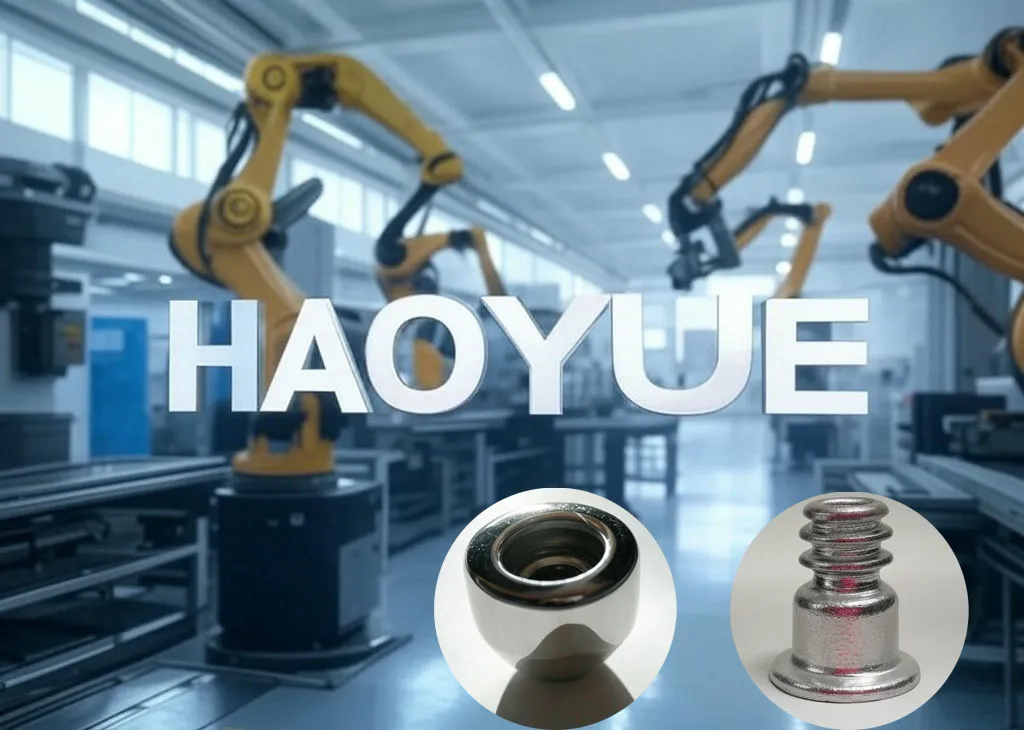
- Gears and transmission components
- Bearings and bushings
- Structural mechanical parts
- High-precision assemblies
- Wear-resistant components
- Multi-layer bonded structures
7. Why Choose Haoyue
- Advanced vacuum and atmosphere control
- Excellent temperature uniformity
- Stable and repeatable processing
- Custom solutions for mechanical applications
- Proven experience in high-performance materials
👉 Helping manufacturers achieve higher quality, precision, and reliability
8. Conclusion
Vacuum furnaces are a core technology in mechanical engineering, enabling:
- Precision heat treatment
- High-performance materials
- Reduced defects and distortion
- Consistent and reliable production
They are essential for both traditional manufacturing and advanced engineering applications.
Call to Action
If you are working in mechanical engineering or manufacturing:
👉 Tell us your material, process, and application
👉 We will recommend the most suitable vacuum furnace solution