Enabling High-Precision Components and Advanced Manufacturing
1. Why the Automotive Industry Requires Vacuum Technology
The automotive industry demands high-performance, cost-efficient, and reliable components.
Modern vehicles—especially electric and high-efficiency models—require:
- High strength and wear resistance
- Consistent material properties
- Complex geometries with tight tolerances
- Long service life under dynamic conditions
👉 Even small defects can lead to reduced performance, increased wear, or safety risks.
This is why vacuum furnace technology is widely used in automotive manufacturing.
2. Key Challenges in Automotive Component Production
Manufacturers commonly face:
- Oxidation during high-temperature processing
- Inconsistent density and porosity
- Distortion of complex parts
- Gas contamination affecting material properties
- High cost of secondary machining and finishing
👉 Conventional furnaces often cannot deliver the required precision and consistency.
3. How Vacuum Furnaces Improve Automotive Manufacturing
Vacuum furnaces provide a clean, controlled, and stable environment, ideal for high-quality sintering and heat treatment.
Core Advantages:
- Oxygen-free processing to prevent oxidation
- High purity and contamination-free production
- Excellent temperature uniformity
- Reduced distortion in complex parts
- Effective degassing for improved density
- Consistent and repeatable results
👉 These advantages are essential for automotive-grade components with high reliability.
4. Key Applications in the Automotive Industry
4.1 Powder Metallurgy Components
Used for:
- Gears
- Bearings
- Structural components
Benefits:
- High density
- Improved wear resistance
- Consistent mechanical properties
4.2 Engine and Transmission Parts
Applications:
- High-load components
- Precision mechanical systems
Benefits:
- Enhanced fatigue strength
- Improved durability
- Stable performance under stress
4.3 Brake and Safety System Components
Used for:
- Brake parts
- Safety-critical assemblies
Benefits:
- High reliability
- Consistent performance
- Reduced defect rates
4.4 Electric Vehicle (EV) Materials
Applications:
- Motor components
- Magnetic materials
- Battery-related parts
Benefits:
- Improved efficiency
- Lightweight structures
- Advanced material performance
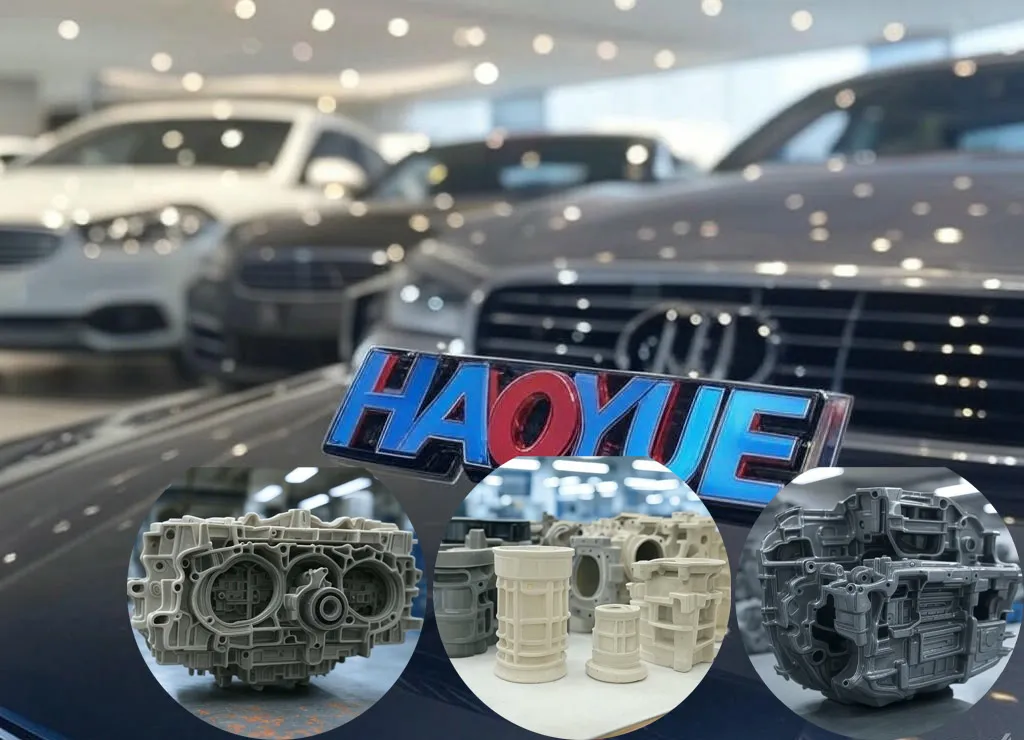
4.5 Complex and High-Precision Parts
Vacuum sintering enables:
- Near-net-shape manufacturing
- Reduced post-processing
Benefits:
- Lower production costs
- High dimensional accuracy
5. Haoyue Vacuum Furnace Solutions for Automotive Applications
G Series – Gas Pressure Sintering Furnace
Best for:
- Powder metallurgy components
- High-density automotive parts
Solves:
- Porosity and density inconsistency
- Weak mechanical performance
Result:
- Strong, durable, high-precision components
H Series – Vacuum Hydrogen Furnace
Best for:
- High-purity alloy processing
- Oxide-sensitive materials
Solves:
- Oxidation and surface contamination
Applications:
- Engine materials
- Advanced automotive alloys
D Series – Vacuum Diffusion Bonding Furnace
Best for:
- Multi-layer and complex assemblies
Solves:
- Weak joints
- Structural instability
Result:
- High-strength, reliable bonding
C Series – CVD/CVI Furnace
Best for:
- Surface coatings
- Wear-resistant treatments
Enables:
- Improved durability
- Enhanced performance
6. Typical Automotive Components Produced
Vacuum furnace technology supports the production of:
- Gears and transmission parts
- Bearings and bushings
- Engine components
- Brake system parts
- EV motor and magnetic components
- High-performance structural parts
7. Why Choose Haoyue
- Advanced vacuum and atmosphere control
- Excellent temperature uniformity
- Stable and repeatable processing
- Custom solutions for automotive production
- Proven capability in high-volume manufacturing
👉 Helping manufacturers achieve higher quality, lower cost, and better consistency
8. Conclusion
Vacuum furnaces are a core technology in automotive manufacturing, enabling:
- High-performance materials
- Precision component production
- Reduced defects and waste
- Innovation in next-generation vehicles
They are essential for both traditional automotive systems and emerging EV technologies.
Call to Action
If you are manufacturing automotive components:
👉 Tell us your material, process, and application
👉 We will recommend the most suitable furnace solution