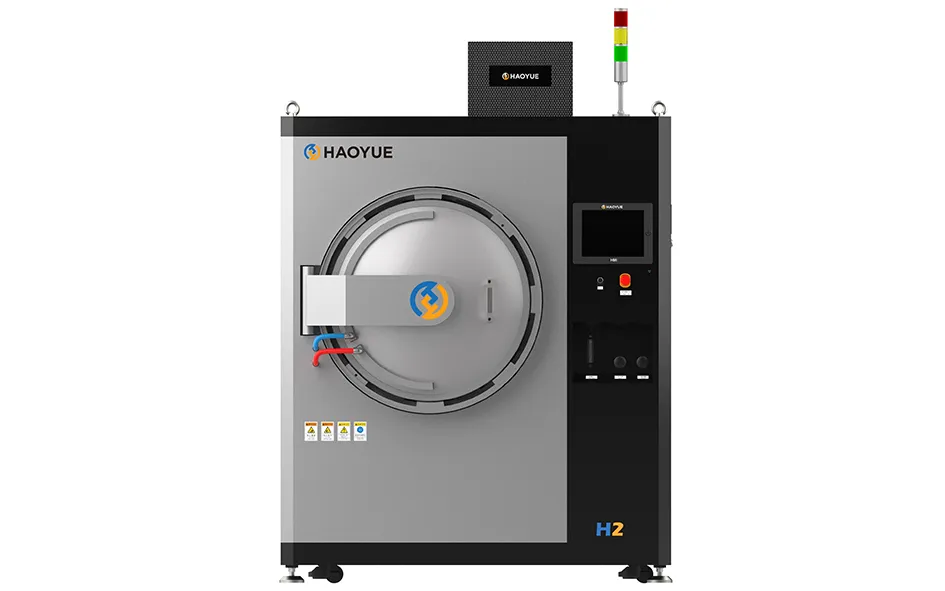
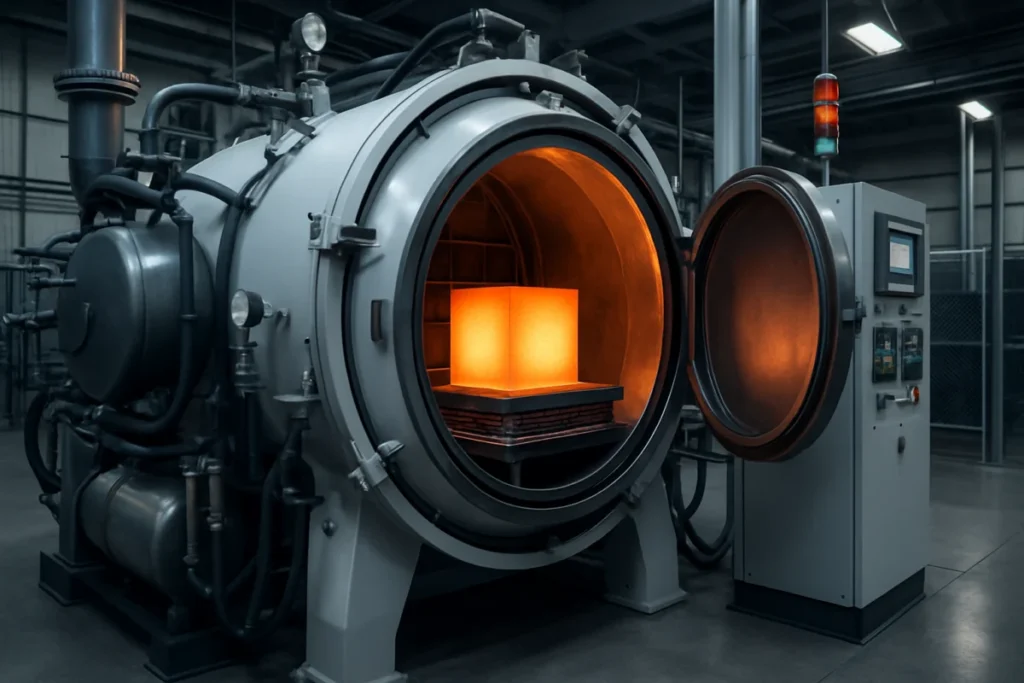
In today’s competitive manufacturing environment, industries like aerospace, medical devices, and precision manufacturing face significant challenges. Inconsistent part quality and compliance risks such as those dictated by Nadcap or ISO standards can hinder production processes. This is where the advantages of a high-end vacuum furnace become crucial, offering solutions to such complex industrial pain points.
Understanding Vacuum Brazing and Its Industrial Applications
Vacuum brazing is a critical process for achieving high-precision joining in components where reliability is paramount. Unlike traditional methods, vacuum brazing minimizes oxidation and contamination, essential for industries like aerospace and medical devices. The process ensures clean, strong joints necessary for components subjected to extreme conditions.
To achieve this, vacuum furnaces maintain precise temperature control and vacuum levels, often up to 10⁻⁶ mbar. This control is vital for producing defect-free joints, enhancing the overall quality and reliability of the final product.
Leveraging Vacuum Heat Treatment for Process Stability
Vacuum heat treatment offers unparalleled process stability, ensuring consistent results across production cycles. With temperature uniformity within ±1°C, these furnaces enhance product quality by reducing thermal gradients that can lead to structural weaknesses.
This technology is particularly beneficial in powder metallurgy, where precise temperature control is necessary to achieve desired material properties. Vacuum heat treatment eliminates the risk of oxidation, maintaining the integrity of sensitive materials throughout the process.
Exploring the Benefits of Vacuum Sintering Furnace
Vacuum sintering furnaces provide a controlled environment crucial for powder metallurgy applications. They enable diffusion bonding at elevated temperatures, resulting in high-density parts with excellent mechanical properties.
Industries benefit from reduced porosity and enhanced material uniformity, addressing common challenges such as inconsistent grain structure. These improvements lead to higher yield rates and lower rejection rates, directly impacting cost efficiency.
Ensuring Compliance with Industry Standards
Compliance with industry standards is a non-negotiable aspect for aerospace and medical device manufacturers. High-end vacuum furnaces are designed to meet stringent standards such as Nadcap, AMS, FDA, and ISO 13485, ensuring that processes and products meet regulatory requirements.
These furnaces offer traceability and documentation capabilities, which are essential for quality control teams to validate compliance and maintain certification across production lines.
Modern vacuum furnace technology is a game-changer, addressing critical challenges faced by industries today. By enhancing process stability and product quality, these furnaces reduce production inefficiencies and compliance risks. Their ability to maintain precise conditions and deliver repeatable results offers substantial advantages, including improved yield rates and cost efficiency.
For engineers seeking to optimize their processes, requesting technical datasheets or a process consultation can provide deeper insights. Procurement managers can explore bulk solutions and request quotations to enhance their procurement strategies. Quality control professionals can inquire about compliance validation and certification support to ensure seamless adherence to industry standards.