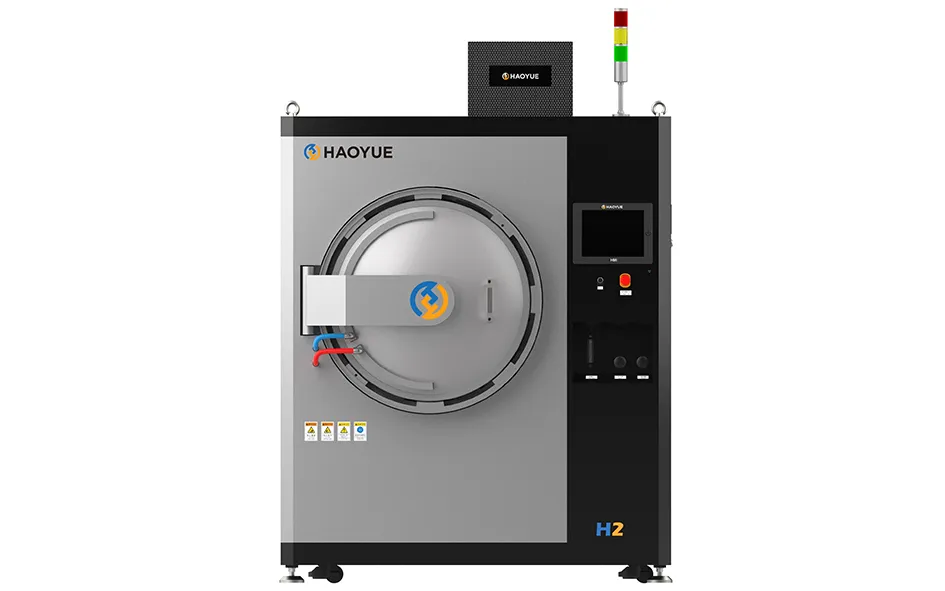
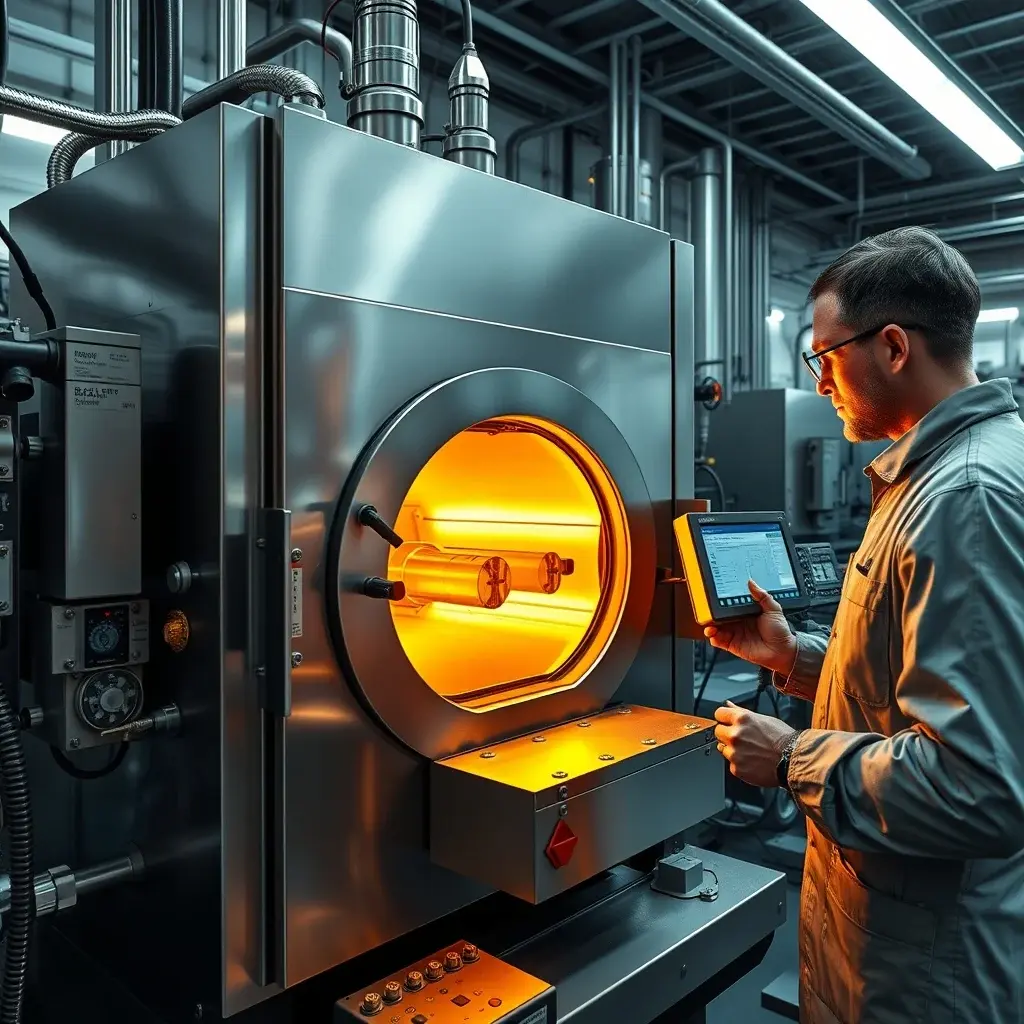
In the realm of precision manufacturing, ensuring consistent part quality remains a daunting challenge. Industries like aerospace and medical devices often face issues related to oxidation, contamination, and compliance risks such as Nadcap and FDA regulations. This is where vacuum heat treatment processes, including vacuum brazing and diffusion bonding, play a pivotal role. They offer a reliable solution to achieve higher hardness and toughness in cutting tools by eliminating atmospheric interference.
Understanding Vacuum Brazing for Enhanced Tool Durability
Vacuum brazing is a critical process that involves joining metals using a filler metal without melting the workpieces. This method is particularly useful in high-precision joining tasks where oxidation and contamination are significant concerns. In industries like powder metallurgy, vacuum brazing ensures integrity and strength, making it a preferred choice over traditional atmospheric brazing techniques.
By maintaining a controlled environment within a vacuum furnace, vacuum brazing can achieve superior joint quality. This approach minimizes the risk of porosity and enhances the mechanical properties of the assembly, resulting in tools that exhibit higher hardness and toughness.
Diffusion Bonding: A Game Changer in High-Precision Joining
Diffusion bonding is another advanced technique used to bond materials at the atomic level. This process is crucial in applications requiring precise tolerances and exceptional strength, such as in the aerospace sector where Nadcap compliance is critical. The vacuum environment facilitates the diffusion of atoms across the joining surfaces, leading to a bond that is often stronger than the base materials themselves.
Industries benefit from the repeatability and reliability of diffusion bonding, as it eliminates the need for additional filler materials and reduces potential contamination risks, leading to improved part performance and longevity.
Leveraging Vacuum Sintering Furnace for Material Integrity
A vacuum sintering furnace is essential for achieving uniform material properties in powder metallurgy. This technology allows for precise temperature control and vacuum levels up to 10⁻⁶ mbar, which are crucial for producing high-quality components with consistent density and minimal distortion.
Such precision is vital for meeting the stringent requirements of ISO standards, ensuring that the sintering process enhances the mechanical properties of the final product without compromising the material integrity.
Enhancing Process Stability with Vacuum Heat Treatment
Vacuum heat treatment is a cornerstone technique for improving the hardness and toughness of cutting tools. By utilizing a vacuum environment, this process minimizes oxidation and ensures uniform heat distribution, which is critical for maintaining tight tolerances and achieving ±1°C temperature uniformity.
This level of control not only enhances product quality but also boosts yield rates and cost efficiency, offering a competitive edge in high-demand sectors like medical device manufacturing, where ISO 13485 compliance is non-negotiable.
Modern Vacuum Furnace Technology: The Path Forward
Embracing advanced vacuum furnace technology is paramount for industries striving to enhance process stability and product quality. With capabilities such as automated batch consistency and repeatable cycle performance, companies can achieve significant improvements in yield rates and cost efficiency.
For engineers, requesting technical datasheets or process consultations can provide deeper insights into optimizing their production processes. Procurement managers can explore bulk solutions and request quotations to drive cost savings, while quality control professionals can inquire about compliance validation to ensure adherence to industry standards.