Application context
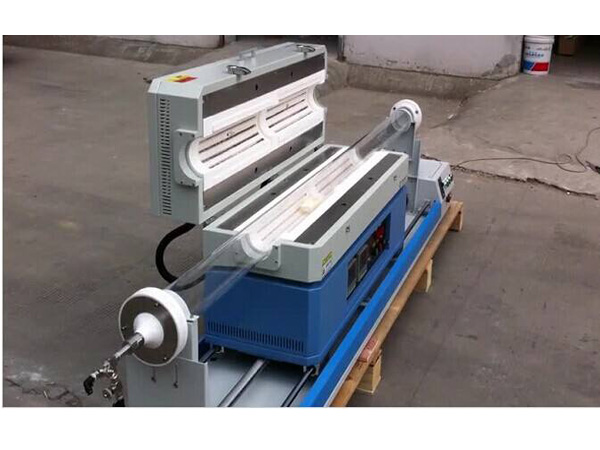
In gas-flow materials research, access to the work tube is part of everyday operation. Sample changes, tube inspection and alignment all affect turnaround between experiments. The split-body configuration shown here exposes the tube without enclosing it inside a fixed furnace shell.
The process challenge
Keep the process path accessible between experiments
A work tube holds the process environment, surrounds the sample and separates that sample from the furnace body. Residue, tube damage or a poorly seated seal can affect the next experiment even when the temperature program stays the same.
For high-purity powders and catalyst trials, tube material and gas chemistry must be reviewed together. The usable heated length also needs to cover the sample boat. A nominal setpoint alone cannot establish whether the whole sample sees comparable treatment.
- Allow access for inspecting the tube and locating the sample boat.
- Match tube material to temperature, gas chemistry and contamination limits.
- Support the tube and end assemblies without avoidable bending loads.
- Define the heated length and temperature profile required by the sample.
The equipment solution
A hinged heating body around the process tube
The raised upper half exposes the insulated heating channel and transparent horizontal tube. Flange assemblies are positioned at the tube ends, with separate supports carrying the external sections.
This layout makes the relationship between the tube, sample position and heated section easy to inspect. For a comparable configuration, we would select the tube grade, seals, gas connections and temperature controls against the intended experiment. Those choices determine the usable operating envelope.
- 01Split opening gives physical access to the work tube.
- 02External supports organise tube alignment and end connections.
- 03End-flange hardware provides connection points for the specified process circuit.
Equipment details
- Hinged heating enclosure shown open
- Transparent horizontal work tube
- Circular flange assemblies at the tube ends
- Tube supports and furnace mounted on a shared base
Practical value
How the design supports the process
| Process priority | Equipment design | Practical purpose |
|---|---|---|
| Service access | Hinged split heating body | The tube and heating channel are accessible for inspection. |
| Sample arrangement | Straight tube with external supports | A defined axis for positioning the sample boat and end fittings. |
| Process connections | External flanges | Gas and vacuum equipment can be specified around accessible connections. |
The split layout addresses an everyday research requirement: reaching the tube and locating the sample within the heated zone. Tube compatibility and a qualified gas path then determine which experiments the system can support.
For your project
Planning a similar installation
For a comparable requirement, the following checks help connect the equipment specification to the process you need to run.
- 01
Confirm tube grade, clearances and support alignment with the actual sample boat.
- 02
Check the temperature profile along the required sample length.
- 03
Leak-test the assembled circuit against the agreed operating conditions.
- 04
Review ramp and cooling limits for the selected tube material and seals.
Talk to HuanYu
Tell us about your application
- Sample and boat dimensions
- Tube material and heated length
- Gas composition or vacuum requirement
- Temperature profile and contamination limits