In industries such as aerospace, powder metallurgy, and precision manufacturing, ensuring consistent part quality while minimizing production costs remains a critical challenge. Inconsistent results, often due to oxidation and contamination during sintering processes, can lead to costly rejections and compliance issues with standards like Nadcap and ISO. The choice between vacuum and atmosphere sintering is pivotal, with vacuum technology offering promising solutions to these prevalent issues.
Understanding Vacuum Sintering Technology
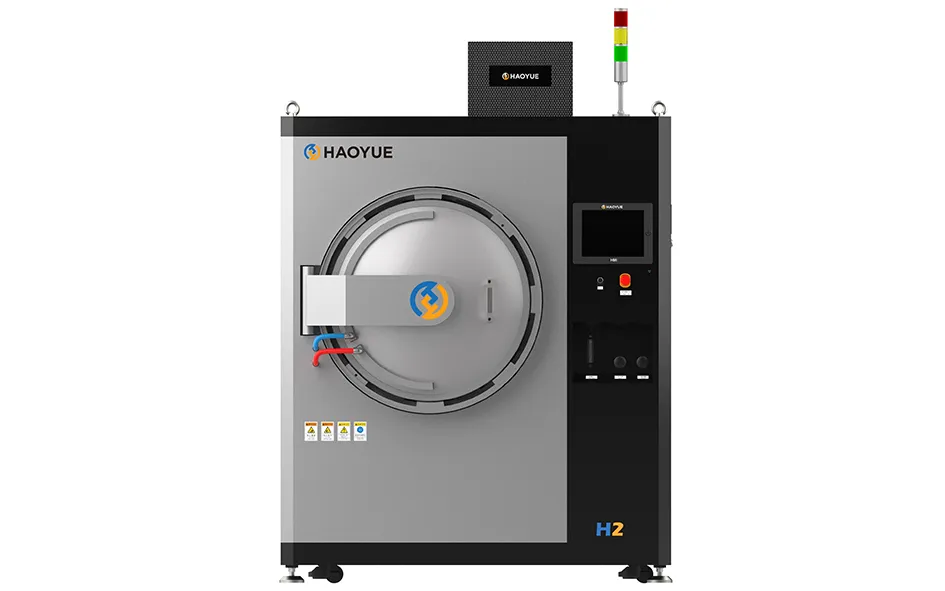
Vacuum sintering involves removing atmospheric gases from the sintering furnace, thus reducing the risk of oxidation and contamination. This is especially beneficial in high-precision industries like medical device manufacturing, where compliance with FDA and ISO 13485 standards is mandatory. Vacuum levels can reach up to 10⁻⁶ mbar, ensuring a clean environment for diffusion bonding and high-precision joining.
Industrial Applications of Vacuum Brazing
Vacuum brazing is a technique widely used in aerospace for joining materials without the need for flux, thereby eliminating potential contaminants. This method provides superior joint integrity, crucial for components that must withstand extreme operational conditions. With ±1°C temperature uniformity, vacuum heat treatment ensures consistent results, enhancing component reliability and compliance with AMS standards.
Addressing Production Challenges with Vacuum Technology
In the realm of powder metallurgy, achieving uniformity in alloy distribution and porosity is essential for maintaining product quality. Vacuum sintering furnaces offer precise temperature control and cycle repeatability, which are critical for producing high-performance parts. By mitigating oxidation, vacuum technology also reduces material waste and improves yield rates.
Compliance and Quality Assurance
Adhering to industry standards is non-negotiable for quality control professionals. Vacuum technologies facilitate compliance by providing controlled environments that meet stringent aerospace and medical standards. Automated batch consistency further ensures that each production cycle meets the necessary specifications, reducing the risk of non-compliance and associated penalties.
Optimizing Cost Efficiency with Vacuum Technology
While the initial investment in a vacuum sintering furnace may be higher than traditional methods, the long-term cost savings are significant. Enhanced process stability and reduced rejection rates lead to lower operational costs. Additionally, the ability to process bulk solutions with consistent quality can provide a competitive edge in procurement strategies.
Modern vacuum furnace technology is a game-changer in enhancing process stability, product quality, and cost efficiency. For engineers seeking technical datasheets or process consultations, procurement managers looking for quotations, and quality teams interested in compliance validation and certification support, vacuum technology presents a practical and economically viable solution.